If you are planning a Brooklyn pop-up, choosing the wrong neighborhood can throw off everything from foot traffic to brand perception. A great space is not just about square footage. It is about finding the right match between your concept, your audience, and the street itself. In Brooklyn, Williamsburg, DUMBO, and Downtown Brooklyn are all strong options, but they serve very different goals. This guide breaks down how each area functions so you can make a smarter choice with more confidence. Let’s dive in.
Why these three neighborhoods matter
Brooklyn’s short-term retail market continues to center on a few high-demand pockets. In REBNY’s H1 2025 Brooklyn Retail Report, retail property sales topped $200 million in the first half of the year, with Williamsburg drawing the most interest. The same report pointed to major rent gains on Washington Street in DUMBO, Fulton Street in Downtown Brooklyn, and North 6th Street in Williamsburg.
That tells you something important right away. These three neighborhoods are viable for pop-ups, but they are not interchangeable. Williamsburg leads with trend energy, DUMBO stands out for architectural character, and Downtown Brooklyn offers the broadest reach and strongest transit utility.
Williamsburg for trend-led retail
Williamsburg is often the best fit when your pop-up needs cultural relevance and a street already associated with new brands. The strongest corridors cluster around Bedford Avenue, Grand Street, Driggs Avenue, and North 6th Street. In South Williamsburg, Broadway acts as the major retail spine.
According to NYC Planning’s Greenpoint-Williamsburg environmental review, Bedford Avenue between North 3rd and North 9th Streets and Grand Street between Bedford and Havemeyer have nearly continuous street-level retail frontage. Driggs, North 6th, and North 7th also support active retail. That kind of continuity matters because it helps your pop-up feel part of an existing retail rhythm rather than an isolated destination.
What the space stock feels like
Williamsburg gives you a useful mix of storefront types. The neighborhood includes 3- to 4-story multifamily buildings, converted industrial loft buildings, and some lower-rise industrial or transportation-related structures closer to Kent Avenue, Wythe Avenue, the BQE, and Meeker Avenue.
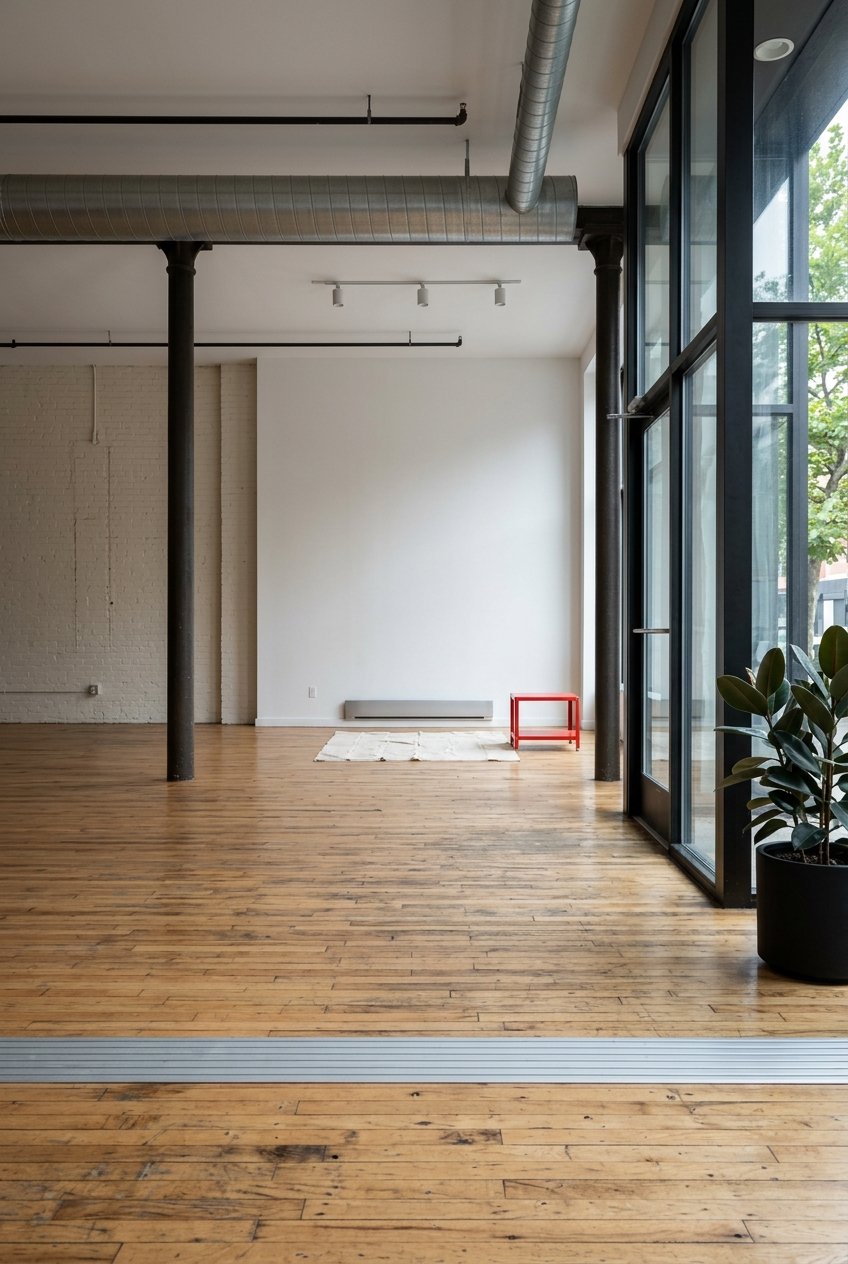
For a pop-up, that range creates flexibility. You can lean polished with a classic storefront, or go more raw and atmospheric in a loft-like or converted industrial setting. That makes Williamsburg especially useful if your concept needs both visual identity and practical adaptability.
Best concepts for Williamsburg
If your brand lives in fashion, beauty, or direct-to-consumer retail, Williamsburg is usually the clearest fit of the three. REBNY noted that North 6th Street continues to attract major international and domestic fashion and accessories brands, many of which are testing new lines or brands there.
The neighborhood also supports cafe concepts and gallery-shop hybrids. If you want your activation to feel plugged into an existing trend-forward retail scene, Williamsburg offers the strongest signal.
What to watch out for
Not every part of Williamsburg performs the same way. Areas near the BQE, Kent and Franklin, and parts of South Williamsburg can have more discontinuous streetwalls and more truck-related activity. That can affect loading, signage, and the first impression visitors get when they arrive.
Budget is another factor. Prime corridors are tight, and REBNY reported that North 6th hit a new peak average asking rent in the first half of 2025. If your budget is sensitive, looking one or two blocks off the hottest spine may help you stay in the neighborhood without paying for the absolute peak corner.
DUMBO for image and atmosphere
DUMBO works best when the space itself needs to be part of the story. This neighborhood sits on the East River waterfront and is defined by narrow historic blocks, striking bridge views, and a preserved industrial streetscape that feels highly cinematic.
In 2025, the city completed a $108 million public-realm project in DUMBO that restored 26 blocks, rebuilt cobblestone streets, improved drainage, added bike lanes, and created Pearl Street Plaza. Those upgrades strengthen an area that already had one of the most distinctive visual identities in Brooklyn.
What the building stock offers
The DUMBO Historic District includes about 91 buildings and is one of New York City’s most significant industrial waterfront neighborhoods. The building mix includes early commercial structures, slow-burning mill construction, steel-frame buildings, and some of the earliest large-scale reinforced-concrete factory buildings in the country.
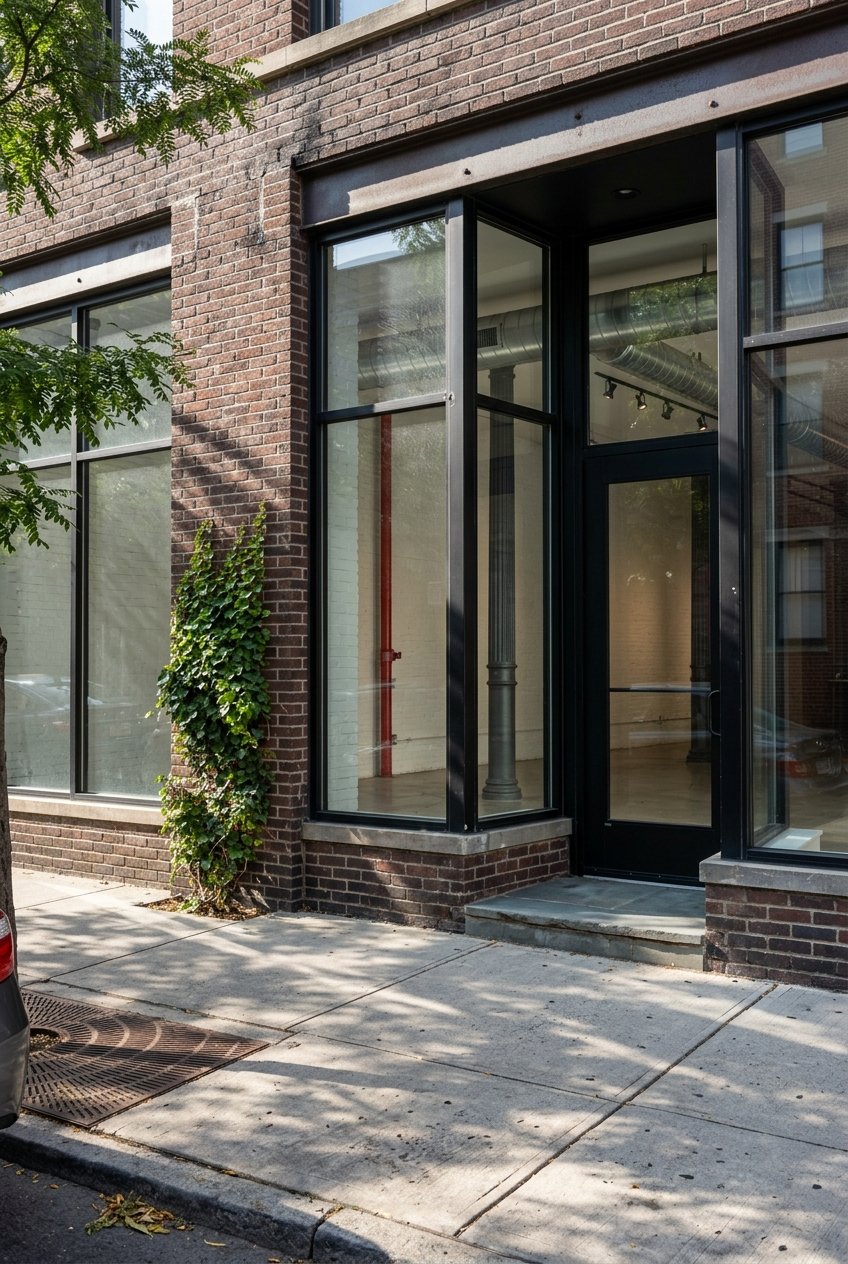
Much of that stock has been converted to residential or office use. For pop-ups, that often translates into spaces with strong bones, polished presentation, and a more curated design feel. If your brand values architecture, texture, and backdrop, DUMBO gives you a lot to work with.
Best concepts for DUMBO
DUMBO is especially compelling for design-forward showroom events, press previews, gallery programming, editorial shoots, and premium brand capsules. The neighborhood’s appeal is less about mass daily convenience and more about visual impact and destination value.
If your concept depends on scarcity, production value, or a memorable setting, DUMBO can be a smart strategic choice. It works well when you want guests to feel like they are arriving somewhere specific, not just stopping by another retail block.
Activation assets in DUMBO
One practical advantage is Pearl Street & Archway Plaza. This public space is about 4,000 square feet, includes seating and planters, and is managed by the DUMBO BID and the Department of Transportation.
For small-scale public-facing programming, this gives brands a useful outdoor or semi-outdoor node. If your activation benefits from an open-air component with a strong architectural backdrop, that can add real value.
What to watch out for
DUMBO is generally more destination-driven than everyday-neighborhood retail. It is usually a better fit for concepts that benefit from image and intentional visits than for concepts that depend on broad, all-day pedestrian volume.
In simple terms, DUMBO can be powerful, but it is usually not the place to rely on casual foot traffic alone. You want the concept to be strong enough that people will seek it out or respond to the setting once they arrive.
Downtown Brooklyn for scale and access
Downtown Brooklyn is the strongest option when your pop-up needs reach, convenience, and room to grow. This area functions more like a central business district than a boutique retail enclave, and that changes how a concept performs there.
NYC Planning identifies C5 districts as places intended for continuous retail frontage, and Downtown Brooklyn is one of the areas mapped within that framework. A 2025 City Planning Commission filing also noted that the neighborhood has access to 13 subway lines, regional rail, several bus lines, and substantial bike infrastructure.
What the space stock offers
Downtown Brooklyn has a bigger and more varied building inventory than Williamsburg or DUMBO. The area includes commercial, residential, and institutional uses, with low- and mid-rise buildings mixed among newer mixed-use towers that range from 30 to 70 stories.
There is also a growing local base of residents. According to Downtown Brooklyn Partnership data cited in the 2025 CPC filing, the neighborhood has added more than 27,000 housing units since the 2004 rezoning, with another 5,000 expected in 2025 alone. That scale supports a different kind of pop-up strategy than the other two neighborhoods.
Best concepts for Downtown Brooklyn
If you need a broader audience, larger footprint, or event-driven flexibility, Downtown Brooklyn is often the best match. It is especially well suited for larger retail pop-ups, food and beverage concepts, entertainment tie-ins, and campaigns that need transit convenience.
REBNY also reported that Fulton Street saw one of the biggest rent increases in Brooklyn retail, while Court Street posted the largest decline from the prior report. That suggests there may be more room to negotiate if you move slightly away from the hottest corridor while staying in the same larger district.
Activation assets in Downtown Brooklyn
Downtown Brooklyn also stands out for public-realm infrastructure that can support activations. Albee Square Plaza spans 18,800 square feet and hosts farmers markets, performances, food concessions, and free Wi-Fi. Willoughby Plaza adds another pedestrian-friendly node near Fulton Mall and MetroTech.
The new L10 Arts and Culture Center in the Downtown Brooklyn Cultural District adds even more programming potential with gallery, performance, library, and plaza uses. If your pop-up includes events, programming, or public engagement, Downtown Brooklyn gives you more built-in tools than the other two neighborhoods.
What to watch out for
The tradeoff is feel. Downtown Brooklyn can read more like a central business district than a charming neighborhood strip. If your concept depends on intimate street texture or a boutique retail atmosphere, Williamsburg or DUMBO may feel more aligned.
Still, if utility matters more than romance, Downtown Brooklyn is hard to beat. It offers the strongest combination of transit, scale, and supporting public space.
How to choose the right fit
The easiest way to decide is to start with the brief, not the hype. Each neighborhood supports a different kind of pop-up experience.
Choose Williamsburg if you want:
- Trend credibility
- A fashion, beauty, or DTC-friendly setting
- Strong retail street energy
- A neighborhood already proven for new labels
Choose DUMBO if you want:
- Architecture to carry part of the brand story
- A design-forward or editorial backdrop
- A destination feel
- A more curated, gallery-like atmosphere
Choose Downtown Brooklyn if you want:
- Scale and easy access
- Broader audience reach
- Larger-format pop-up potential
- Public-space support for events and programming
Budget strategy across all three
If cost is part of the challenge, the biggest lesson is not to chase only the headline blocks. REBNY reported that concessions are dwindling in many corridors, and the steepest rent jumps were on Washington Street, Fulton Street, and North 6th Street.
That means a smart search often involves looking one or two blocks off the hottest spine. In many cases, you can preserve the neighborhood signal while gaining more flexibility on terms, layout, or timing.
The bottom line
Williamsburg, DUMBO, and Downtown Brooklyn can all work for a successful pop-up, but they solve different problems. Williamsburg gives you trend relevance and strong retail adjacency. DUMBO gives you atmosphere, architecture, and destination value. Downtown Brooklyn gives you transit, scale, and operational range.
The best choice comes down to what your concept needs most. If you match the neighborhood to the brief early, you give your pop-up a much better chance to feel intentional, workable, and memorable from day one.
If you are narrowing down Brooklyn neighborhoods for an activation, showroom, or short-term retail launch, Dan Atmaram can help you match the concept to the right street, space, and rollout strategy.
FAQs
What is the best Brooklyn neighborhood for a fashion pop-up?
- Williamsburg is usually the strongest fit for fashion, beauty, and DTC launches, especially around North 6th Street, Bedford Avenue, Grand Street, and Driggs Avenue.
Is DUMBO a good location for a retail pop-up in Brooklyn?
- DUMBO can be a strong choice if your pop-up depends on architecture, visual identity, and destination appeal more than broad all-day foot traffic.
Why choose Downtown Brooklyn for a pop-up event?
- Downtown Brooklyn is often the best option when you need transit access, larger footprints, public programming support, and a broader audience.
How do Williamsburg, DUMBO, and Downtown Brooklyn differ for pop-ups?
- Williamsburg is more trend-led, DUMBO is more design- and image-driven, and Downtown Brooklyn is more scale-friendly and transit-dense.
Are prime Brooklyn pop-up corridors getting more expensive?
- Yes. REBNY reported notable rent increases on North 6th Street in Williamsburg, Washington Street in DUMBO, and Fulton Street in Downtown Brooklyn during the first half of 2025.